18 March 2026
LMS vs CMS: what are the differences and which do I need?
If your organisation is just starting its journey into online learning, you might be weighing up whether an Learning management system or a Content management System is right for your requirements.
Should you invest in a learning management system (LMS) or a content management system (CMS)? Let’s compare the two and hopefully help you decide whether an LMS or CMS is the most appropriate platform for your needs.
What are the differences between LMS and CMS?
The clue to the main difference between learning management systems and content management systems is in the names. As we’ve mentioned, LMS stands for learning management system and CMS stands for content management system.
An LMS is a platform that has been specifically designed to host, manage and deliver e-learning. A CMS is a generic platform that is intended to host and manage all forms of online content, most commonly text, images and video.
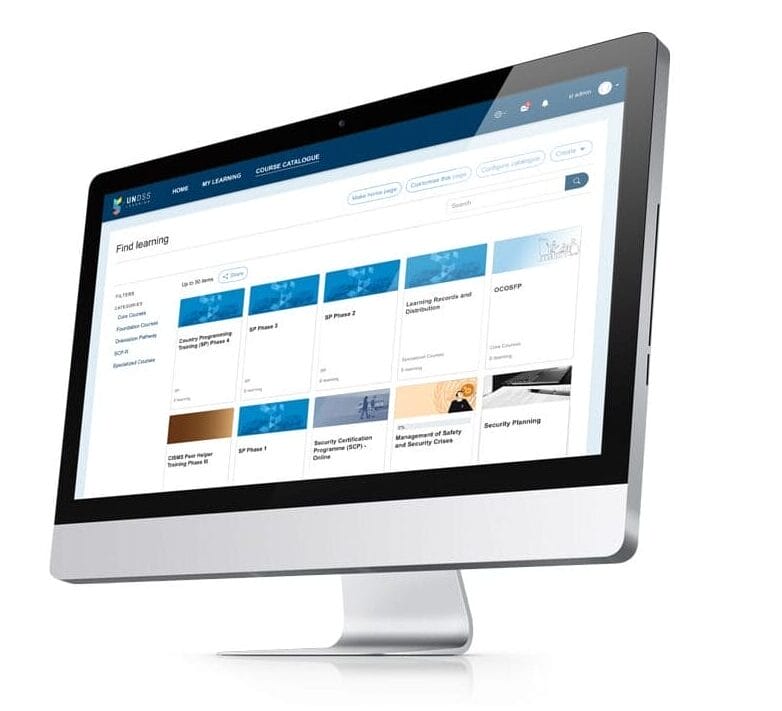
What is LMS?
An LMS is a platform that delivers online learning materials to learners in corporate and educational environments. In addition to sharing training content with users, an LMS also allows administrators to track learner participation and progress. Moodle and Totara are examples of popular learning management systems.
Most learning management systems allow teachers, trainers or administrators (depending on the preferences of the organisation in question) to upload online training content, structure courses and assign these to learners. Teachers can then analyse participation, assess or grade work, and reward or certify completion.
As such, an LMS is perfect for:
✅ Managing courses and learning resources in an L&D department or educational institution.
✅ Meeting compliance requirements by ensuring staff stay up to date with mandatory training.
✅ Upskilling your people by guiding them through personalised learning pathways.
✅ Tailoring training to specific roles, the needs of the learner or organisational skills gaps.
✅ Overseeing offline learning, such as booking and attendance monitoring for seminars.
✅ Tracking performance and engagement levels among individual learners and your organisation as a whole.
We explore all of these things in more detail in our article What Is a Learning Management System?, which could be useful reading as you compare an LMS vs CMS.
What is CMS?
A content management system is a framework in which content can be stored in order to be displayed on a website. A CMS manages various types of content, including text, images, files, audio and video.
WordPress and Drupal are examples of popular content management systems.
The functionality available varies between different content management systems. Typically, a CMS provides users who wouldn’t ordinarily have the technical know-how to build and maintain a website with an easy system by which to upload, edit and publish content.
A CMS can be (and generally is) used for managing every type of website from a personal blog to large corporate websites. The use of content management systems cuts across all sectors and business types, so a learning CMS would be a content management system that has been built or populated in such a way that it allows for the creation, management or delivery of online learning content.
Benefits of LMS vs CMS
The main advantages of a CMS are its simplicity, universality and ease of use. Content management systems have made what was once the technical job of updating and maintaining web pages something that can be done relatively quickly and with very little skill needed.
But this is also the key disadvantage of a CMS compared to an LMS. A learning management system is equipped with specific, niche features and functionality that are only relevant to the delivery of learning and not other forms of content.
For that reason, although most learning content can technically be hosted and delivered using a CMS, doing so would sidestep some fundamental aspects of learning and development. These include:

Analytics and reporting
The analytics generated by a CMS are very different from those in an LMS. An LMS reporting system is made specifically to track learners and monitor their performance. A CMS is geared mainly to monitor pageviews and other standard measures of website engagement.

Competency frameworks
Unlike a CMS, an LMS is underpinned by competency frameworks. In other words, the platform itself is based on an understanding of the skills needed by each individual, in each role and by the organisation as a whole. With a CMS, that data needs to be held and managed elsewhere, then applied manually when learning is being assigned.

Automated learning paths
An LMS is specifically designed to enable learners to follow clear pathways. Courses and content have a hierarchy. This means people can easily follow a progression through learning, and this process can be automated. A CMS has a flat content structure, which means lengthy manual intervention is needed by admins or users to achieve the same progression.

Interactive multimedia content
Given its ubiquity within the e-learning industry, an LMS is made to manage and display SCORM-compliant learning content. These learning content packages not only deliver seamlessly but also collect important tracking data on learner engagement and performance. A CMS will not generally be equipped to handle SCORM content in the same way.
LMS vs CMS: a case study
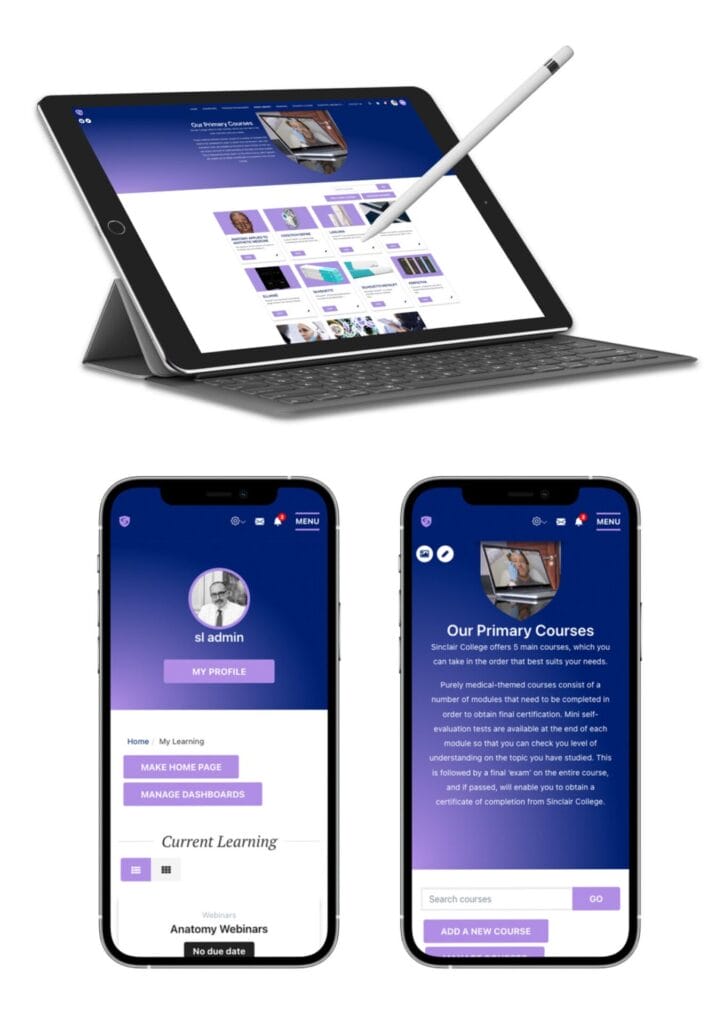
Sinclair Pharma provides its products to aesthetic physicians around the world.
With the pharmaceutical sector still heavily reliant on travelling reps and face-to-face training, Sinclair Pharma took the bold decision to launch Sinclair College, embracing video and online learning as a way of providing training of a consistently high quality to all its physicians.
Like many organisations, it was left weighing up whether an LMS or CMS was best for its needs. What was the right approach for hosting and delivering its resources? The company initially went down the CMS route, developing a WordPress site to host its training content.
But within a year, Sinclair Pharma had decided to launch an LMS using Totara Learn. The CMS had proven the case for online learning, but its lack of flexibility and functionality had been frustrating.
The e-Education team had little information on which learners were undertaking courses. They also found it difficult to automate course progression based on an individual learner’s experience, interests and professional specialisms.
With an LMS built to do exactly what they needed from a training platform, Sinclair Pharma has been able to deliver online learning to more than 10,000 physicians worldwide and keep tabs on which physicians have undertaken particular courses.
The platform is easier for physicians to use, which has resulted in increased engagement with training courses. It has also made it easier for Sinclair Pharma to guide learners along intuitive training pathways.
Is an LMS or CMS best for you?
Both an LMS and CMS offer cost-effective ways of delivering your content to the people you want to see it.
Perhaps the deciding factor will be the main purpose of your platform.
A CMS is ideal for a website, blog, portfolio and other forms of content.
But if your platform exists mainly to provide e-learning and online training, the specialist functionality of an LMS is likely to be more beneficial in the longer term, particularly if you expect the number of courses or learners to grow over time.
To discuss the functionality of learning management systems like Moodle and Totara with our learning technology experts, get in touch.
FAQ
What is a learning management system used for?
A Learning Management System (LMS) is a digital platform that helps organisations deliver, manage, and track employee training in one central place. It enables businesses to create structured learning programmes, assign courses, monitor progress, and measure performance through real-time reporting. From onboarding and compliance training to ongoing professional development, an LMS streamlines the entire learning process, making it easier to upskill teams, ensure regulatory compliance, and support continuous growth across the organisation.
What is a content management system used for?
A Content Management System (CMS) is a software platform that enables organisations to create, manage, and publish digital content without requiring advanced technical expertise. It allows teams to efficiently update website pages, upload media, and maintain consistent messaging through an intuitive interface. By streamlining content workflows, supporting collaboration, and ensuring version control, a CMS helps organisations keep their digital presence current, scalable, and aligned with business objectives.
Ready to get started?
Decided an LMS is better than a CMS for your requirements? Take the first steps towards your organisation’s perfect learning management system right now.
Schedule a demo today.