
19 August 2026
How can learning management systems help organisations maintain regulatory compliance across multiple regions?
Combine centralised control with regionalised flexibility to create a platform that supports your organisation’s global compliance goals.
Delivering effective compliance training is a significant undertaking for any organisation. For employers operating across multiple countries, regions and legal jurisdictions, consistently meeting regulatory requirements becomes even more complex.
They can’t allow every part of the organisation to operate independently, nor can they enforce a one-size-fits-all approach to compliance across all regions.
In the face of all those complications, multinational organisations need a compliance training LMS that is equipped to manage a range of different regulations, languages, learning requirements, learning groups and reporting needs across multiple regions.
This supports global compliance training in a way that cuts overheads, reduces duplication and maintains consistency, while also meeting the specific needs of different divisions.
Why global compliance is challenging
Multinational organisations typically build global success through, among other things, consistency, efficiency and economies of scale. This hasn’t always been easy to achieve in regard to compliance.

Ideally, an employer wants to deliver consistent and meaningful training to all employees. This often isn’t practical or appropriate when dealing with global compliance. This is true for a host of reasons, including:
- ✳️ Learners having a different first language
- ✳️ Differences in regulations between different jurisdictions
- ✳️ Training being mandatory in one country but not another
- ✳️ Different certification requirements between different countries
- ✳️ Variations in privacy laws around reporting
- ✳️ Organisational complexity, including different legal entities, divisions, employment types and reporting structures.
That’s why a global LMS is a key compliance tool. It provides the infrastructure, controls, workflows, visibility and evidence that help a multinational organisation manage its varied compliance obligations.
What to look for in a global LMS
Delivering effective compliance training worldwide means investing in a learning management system that is equipped for the job. We mentioned that multinational organisations depend on consistency, efficiency and economies of scale, so the first step in finding a global LMS is to make sure all of those boxes are ticked.
For a multinational LMS, this includes:
Automation
A global LMS should automate repetitive and time-consuming administrative tasks to save significant administrative time and resources. Some key areas that benefit from automation include:
- ✅ Adding, updating and removing users
- ✅ Assigning relevant learning to users
- ✅ Creating learning pathways (which we will discuss in more detail below)
- ✅ Sending notifications and reminders to learners
- ✅ Delivering certifications
- ✅ Creating and distributing reports
- ✅ Recertification and refresher training
This use of automation helps to limit compliance risks around:
- ✳️ People being missed from mandatory compliance training
- ✳️ Training being assigned to the wrong learners
- ✳️ Expired certifications being missed
- ✳️ Leavers still having access to the LMS
- ✳️ Regional differences not being reflected in learning assignments
Learning pathways
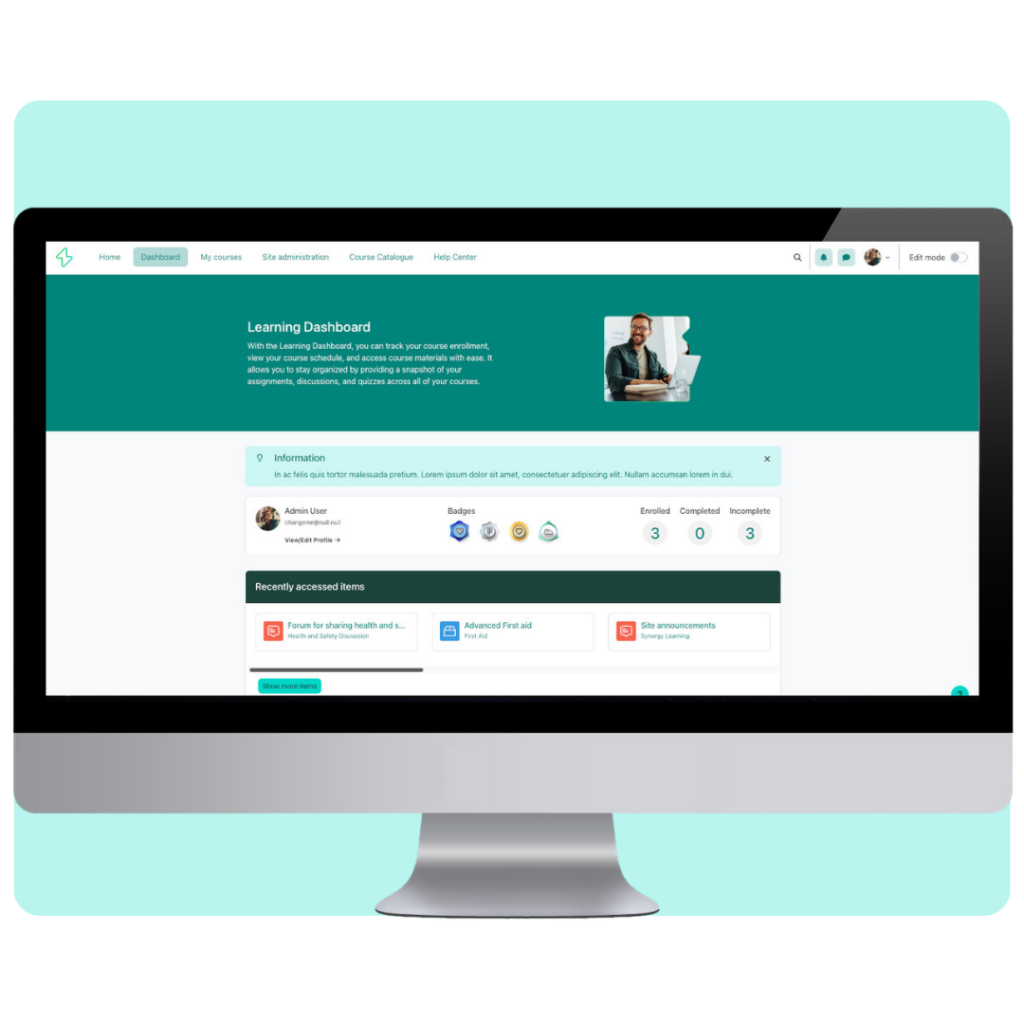
Learners worldwide should be able to follow proven, practical learning pathways without the need for manual intervention. Using dynamic rules and audiences, relevant learning should be automatically assigned to people depending on their role, experience and location.
Integrations
To achieve the efficiencies of scale a multinational organisation relies on in other strategic areas, its learning management system needs to integrate effectively with other key business systems. For example, useful LMS integrations include:
- ✳️ HR system to enable automation and remove duplication when managing user profiles
- ✳️ Microsoft 365 to bring learning into employees’ daily workflow
- ✳️ Single sign-on to improve access to learning and increase password security
- ✳️ Business intelligence to build meaningful insights from the LMS
- ✳️ Slack and Microsoft Teams for convenient messaging and notifications
Certifications
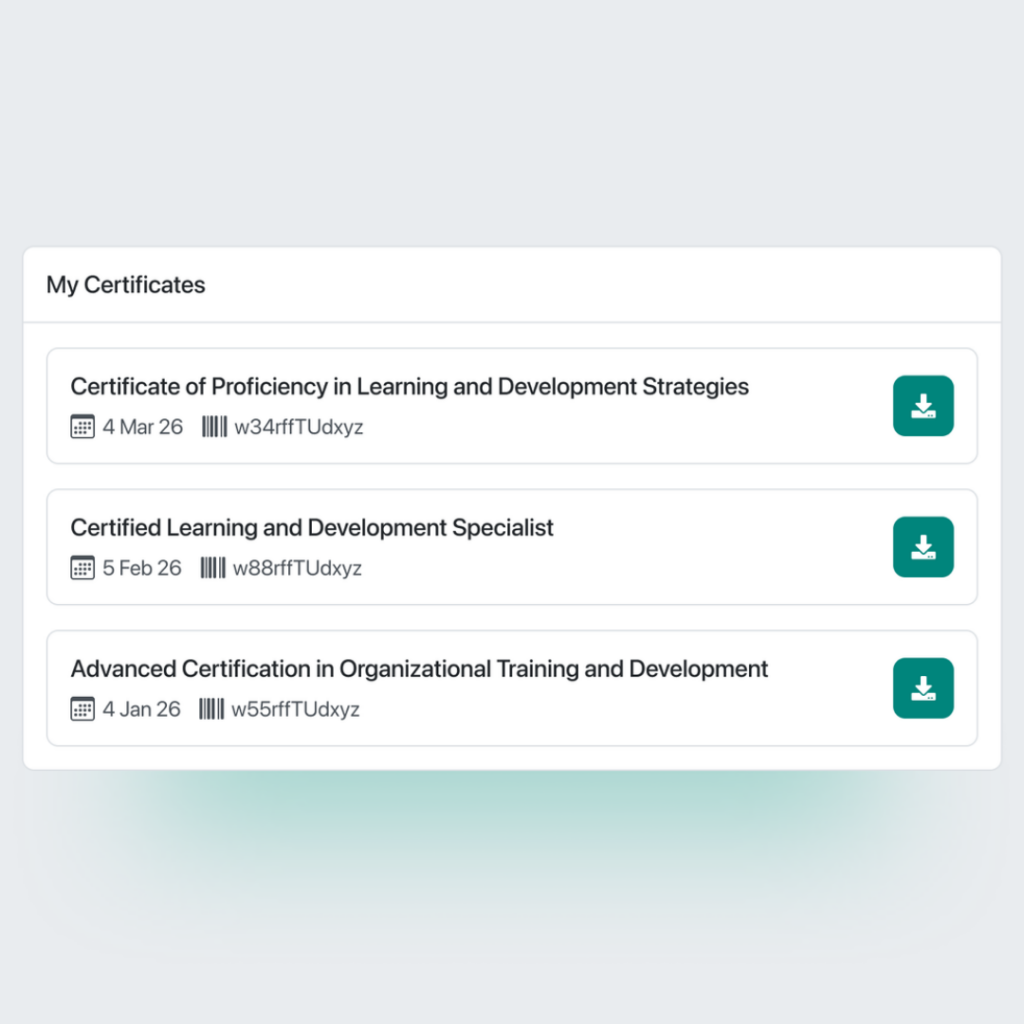
As we’ve touched on in relation to automation, a global LMS must streamline, simplify and speed up processes around certification and recertification. It can do this by automating or supporting workflows around:
- ✳️ Setting certification expiry dates
- ✳️ Creating automated recertification pathways
- ✳️ Defining certification renewal windows
- ✳️ Allowing grace periods
- ✳️ Automating refresher training enrolment
Reporting and auditing
A powerful reporting system and easy access to LMS analytics is another key factor for any organisation maintaining regulatory compliance across multiple regions. This includes:
- ✳️ Creating, duplicating and scheduling reports
- ✳️ Automating creation and delivery of reports
- ✳️ Applying filters to drill down into key data
- ✳️ Targeting report delivery to relevant stakeholders
These features make it easier for stakeholders throughout the organisation to prove that the right people were assigned the right learning, and that records were kept to show this. This will avoid significant expense and upheaval in the event of an audit.
While those fundamentals underpin a successful multinational LMS, a learning platform must go beyond that to help organisations manage regulatory compliance requirements across multiple countries.
Localisation
All the aspects of learning management systems we’ve discussed so far must be customisable at a local level. Recertification requirements for one country will be different in another. Key LMS reporting insights in one jurisdiction could breach data protection laws elsewhere. Some aspects of compliance training may not be mandatory in all markets.
With that in mind, it is important that these details can be edited and adjusted for specific audiences within the organisation.
Centralised governance
At the other end of the scale from localisation, a truly effective multinational LMS must also enable centralised governance. This is often necessary to achieve the consistency and efficiency needed by an organisation operating at scale. Centralised governance:
- ✳️ Removes duplicated systems, processes and learning technologies
- ✳️ Enables organisation-wide reporting and audit trails
- ✳️ Supports consistent regulatory training across the organisation, where appropriate
- ✳️ Creates a centralised point of contact within the organisation for compliance worldwide
- ✳️ Delivers efficiency at scale
The role of multi-tenancy in global regulatory compliance
When we’re thinking about a learning management system capable of achieving centralised governance, local customisation, organisation-wide efficiency and economies of scale, multi-tenancy is an important consideration.
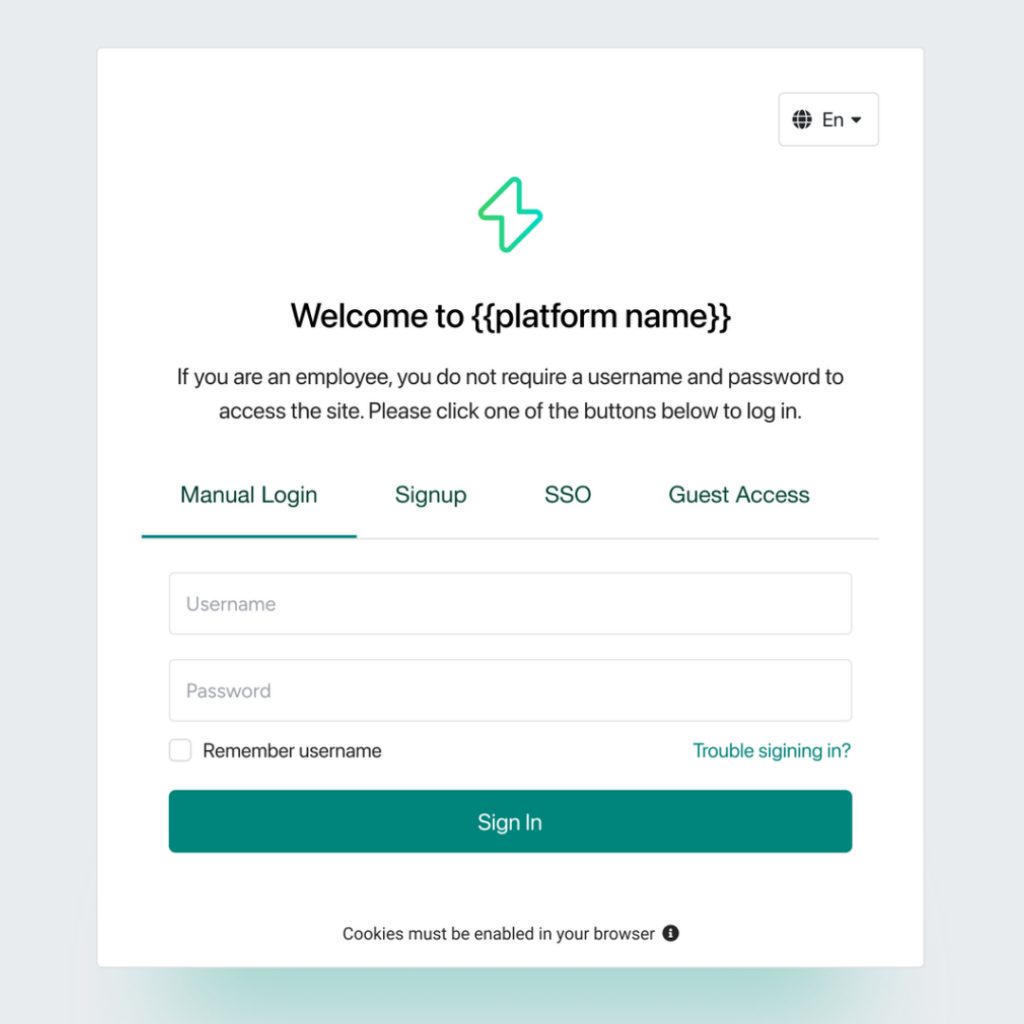
A multi-tenancy LMS gives organisations that are balancing different regulatory compliance training obligations the infrastructure to do this effectively. First and foremost, multi-tenancy enables an organisation to manage all of its compliance training worldwide using a single LMS installation. This removes both the overheads and administrative burden of operating multiple learning platforms, as well as the complications and inconsistencies of different parts of the organisation using different technologies.
The single LMS installation creates a shared learning infrastructure capable of serving the entire organisation. Since this can be controlled centrally, it supports a consistent approach to global compliance. For example, the organisation’s compliance policies can be delivered identically to every learner worldwide.
Crucially, multi-tenancy also enables multiple different learning environments to be created within the single installation. It’s simple to set up a tenancy for different divisions, regions and countries. This means every part of your organisation gets a learning environment that is in the most appropriate language, in accordance with local laws and regulations, and administers the required compliance training effectively.
A multi-tenancy LMS creates appropriate separation between the different parts of an organisation. It also means each part of the organisation gets autonomy over how compliance training is delivered to its learners, always with the safety net of centralised governance.
How Totara and Moodle support multinational compliance training
Both Totara and Moodle Workplace are flexible enterprise learning management systems that can support the sort of multi-tenancy structure we’ve discussed. As such, they are strong choices for organisations with complex organisational structures and global regulatory compliance requirements to meet. Both platforms support these needs through:
Reducing admin by mirroring organisational hierarchies
As well as enabling multi-tenancy infrastructure, Totara and Moodle are designed to model an organisation’s structures. They mirror different regions, teams and reporting lines within your organisation.
When someone moves to a new role, the compliance training and other learning they need is automatically assigned without the need for manual intervention. The flexibility of both platforms means multiple organisational structures can be in place across different tenants, reflecting the fact that there may be different operating models within the organisation.
This not only frees up admin time and resources but also reduces the likelihood of people being given the wrong training or missing mandatory training.
Consistency and control without complete standardisation
Through multi-tenancy models, both platforms give organisations the power to deliver a single learning strategy and common compliance standards consistently to all employees worldwide.
But the individual learning environments still give scope for individual countries, divisions or subsidiaries to deliver compliance training in a way that works for them.
This achieves the economies of scale we’ve discussed throughout this article and gives headquarters governance and oversight, while also ensuring compliance training remains workable, relevant and aligned with local requirements.
Cutting costs and removing duplication
Since a multi-tenancy LMS operates through a single installation, this removes the need for multiple learning platforms and makes localisation more cost-effective.
Equally, the infrastructure means that common aspects of compliance training and other workplace learning can be quickly replicated for multiple tenants. In other words, settings, courses, reports and other features can easily be applied to all relevant parts of the organisation.
Reusing content and processes, as well as operating from a single LMS, creates immediate and ongoing financial savings for an organisation.
Time-saving rules and automation to manage change
We’ve mentioned that both Totara and Moodle support multi-tenancy environments, and can mirror complex organisational structures. Since both platforms also operate based on dynamic rules and audiences, they can also adapt instantly to organisational change.
Whether it’s an employee moving to work in a different region, being promoted to a management position or transferring to another division, both Totara and Moodle will automate much of the associated administrative work. As long as you integrate your LMS with your HR system, your people will automatically move to the right place within the structure and be allocated the right compliance training.
Less flexible learning management systems would need a substantial investment of admin time and resources to achieve the same outcomes – and would still be prone to human error.
Scalable and adaptable compliance platforms
None of the things we’ve discussed so far are set in stone. Multinational organisations are often subject to mergers, acquisitions, expansion, new business models and other substantial change.
Totara and Moodle Workplace both adapt to that change and scale with the organisation. They are highly customisable learning management systems, enabling the organisation to grow and evolve over time without having to replace its LMS every time there is significant change.
This not only protects investment in learning technology, but also encourages continuity within the organisation even during times of upheaval.
See global compliance training LMS in action
Many of the organisations we work with operate across multiple markets, which makes managing compliance requirements a vital aspect of their LMS.
A prime example is global charity Save the Children, which needs to deliver vital mandatory training on topics such as safeguarding, personal safety and security, and regulatory requirements to 20,000 employees working around the world.
This includes staff in its London headquarters and its 30 national member organisations, but also teams working in dangerous and remote areas, such as Yemen, Syria and Bangladesh’s Kutupalong refugee camp. That encompasses a wide range of different languages, laws and compliance requirements.
Using its Totara Learn enterprise LMS, Save the Children can deliver learning via user hierarchies that match its complicated structures. Admin permissions are delegated to training champions in each country, with access controlled and set centrally. Relevant learning can be assigned globally or adapted locally as needed. For example, many of the charity’s learners are operating in areas with unreliable internet access. This might require training to be delivered in a different way.
A powerful LMS reporting system means the charity gets an overview of its compliance performance organisation-wide, but also locally within each country.
Another case of a large organisation maintaining regulatory compliance training across multiple regions is the financial services business Western Union. Given that finance is one of the most highly regulated industries, compliance is a key consideration for any financial services LMS.
Western Union works with 500,000 agents, speaking 50 languages and scattered across the globe, making its regulatory requirements even more complex.
The LMS we created means Western Union can push urgent compliance training to all 500,000 agents simultaneously when needed. The platform can also scale and grow with the business to meet new or changing compliance obligations.
For Remondis, one of the world’s largest recycling, industrial services and water treatment companies, we created an LMS to help it balance compliance commitments to 30,000 employees at 800 locations across four continents.
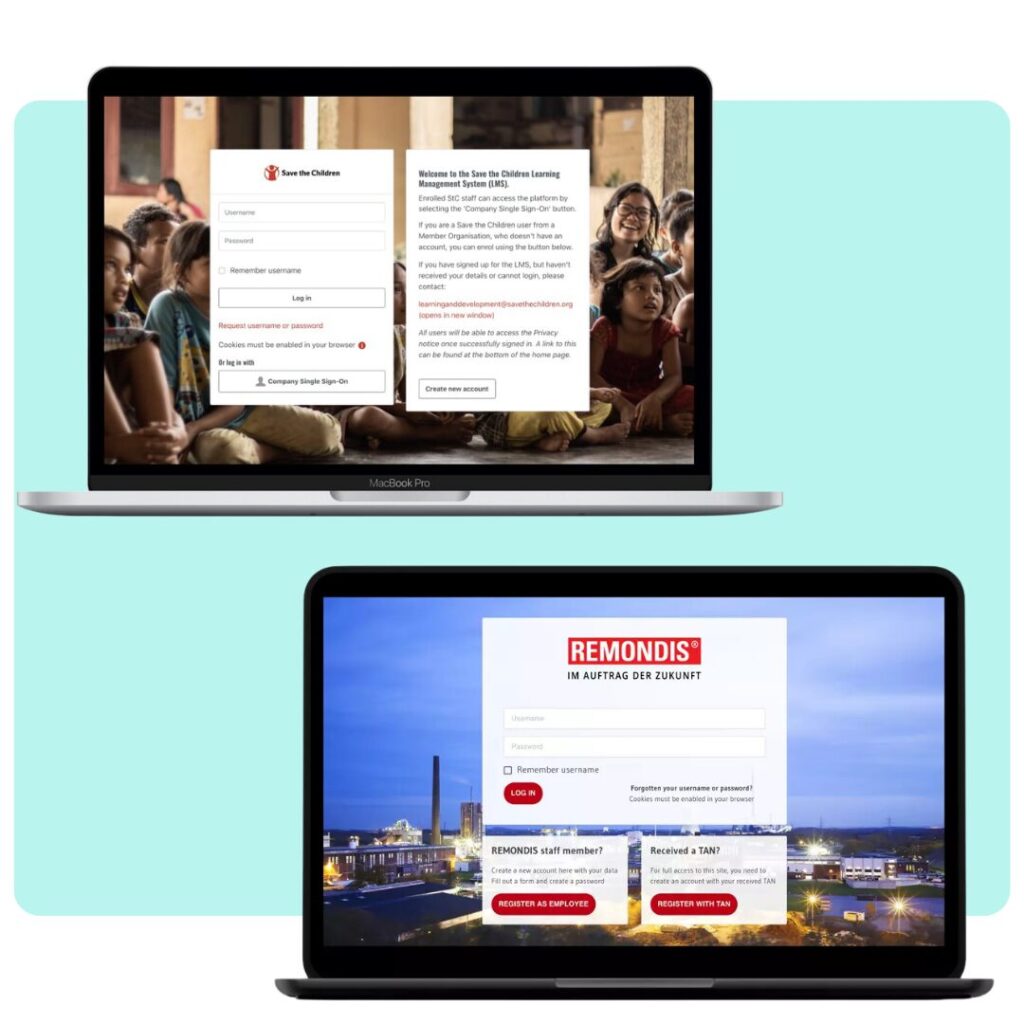
The IT department at Remondis’ headquarters in Germany has centralised oversight of all training and certifications. Meanwhile, Totara’s multi-tenancy structure gives localised control over some aspects of learning to managers at sites across Germany, Poland and the Netherlands.
“Various industrial and legal requirements meant it wasn’t easy to train our employees in different cities and countries. Totara – with the support of Synergy Learning – was the complete package for the job,” explained the company’s application manager Salih Çelebi.
Global consistency vs local flexibility
As those customer stories show, the sweet spot for global compliance training is being able to balance global consistency with localised flexibility.
Key aspects of a multinational LMS need to be standardised. These include:
- ✳️ Governance and auditing
- ✳️ Reporting and insights
- ✳️ Core compliance processes
Without centralising these aspects, a large multinational will lose the economies of scale, efficiencies and benefits of a consistent compliance culture. Its compliance processes become bloated, disparate and inconsistent.
But the same compliance processes need to adapt to local requirements and regulations. That means choosing an LMS with the flexibility to adopt regulations, language, policies and learning pathways that are specific to a particular part of the organisation.
Without local flexibility, an LMS becomes too rigid and fails to meet the needs of all parts of an organisation. This will either damage compliance levels or force people on the ground to find unofficial workarounds.
Managing global compliance requirements inevitably creates a tension between consistency and localisation. The right learning infrastructure allows organisations to resolve that tension rather than choosing one or the other.
What should organisations ask when selecting an LMS?
When choosing an LMS for global compliance, there are some key questions you need to ask to make sure the learning platform you choose is the best fit for your compliance requirements.
Does the LMS support our organisational structure?
For organisations managing compliance across multiple regions, entities or divisions, it’s important to consider whether a platform will mirror the organisational hierarchy. Where appropriate, this will involve a multi-tenant LMS.
Does the LMS offer global governance and regional administration?
Find out exactly what aspects of the LMS can be localised to see if the level of flexibility matches what you need.
Does the LMS reporting functionality support global oversight and local accountability?
Make sure the learning platform’s reporting system will meet your organisation’s needs. That means having the flexibility to create, schedule and automate both global and localised reports, and ensuring each report can be automatically delivered to the right people.
Can certifications be automated?
Certifications and recertifications can be a huge drain on time and resources. Your LMS should streamline and automate the processes around certifications.
Does the LMS integrate with key business systems?
To maximise the efficiency, accessibility and cost-effectiveness of your LMS, it needs to integrate with other key systems used by your organisation. Make sure any prospective LMS integrates with the systems that matter to you.
Will this LMS grow with the organisation?
Will a growing workforce, a merger or an acquisition impact how well your learning platform’s ability serves your organisation? Make sure your LMS is scalable and will adapt to changing needs.
Can I delegate administrative tasks?
Make sure the LMS settings include the option of delegating admin roles, so that these can be managed at a local level. Crucially, does the platform give you control over precisely what permissions you’re handing out – and can you retain centralised oversight and control?
Take control of global regulatory compliance
Talk to Synergy Learning’s learning technology experts about designing a global compliance LMS to support your multinational organisation’s global and local compliance requirements.