25 February 2026
How to drive engagement with LMS gamification

Natalie Holborow
Content Marketing Manager
How to use LMS gamification to boost learner engagement with your courses and resources.
Learning can often feel like a checkbox exercise. We’ve all skipped through uninspiring slides of text in induction training or grudgingly completed refresher courses on compliance topics. But what if learners were excited to log in, complete modules and even found themselves motivated to complete assessments?
Gamification involves using game-like elements to spark motivation in the learning process. The good news is that you don’t need a dedicated gamification platform or complex tools to achieve this – today’s learning management systems are equipped with the tools you need to drive learner engagement, retention and overall satisfaction.
What is gamification in learning?
Gamification in learning is the process of using game elements in a non-game context. This might mean applying elements like points, levels, challenges, rewards and leaderboards to non-game contexts, such as your corporate training or academic LMS. It taps into the natural human drives of achievement, competition, progress and even play.
There are several benefits to using gamification in learning:
- ✅ Increases motivation – Earning badges or unlocking new levels gives learners tangible goals to strive for (e.g. think of Duolingo, the language app that uses gamification and nudges to motivate over 50 million daily active users).
- ✅ Promotes active learning – Interactive elements like challenges or scenario-based quizzes can help make learning feel less passive.
- ✅ Provides instant feedback – Gamified elements offer real-time rewards or corrections, reinforcing concepts faster.
- ✅ Fosters healthy competition – Leaderboards or peer challenges create a sense of community and shared motivation.
Builds learning habits – Gamified systems encourage regular encouragement through micro-achievements.

How to gamify your learning with an LMS
Not all learning management systems are created equal, so before you start thinking about badges and leaderboards, ask yourself: “Does this LMS support the gamified learning experience I want to create?”
According to a 2023 report by Mordor Intelligence, the global market for gamification in learning is expected to grow at a CAGR of 26.5% between 2023 and 2028, driven largely by increased adoption in LMS platforms and e-learning environments. This increase demonstrates how learning strategies are becoming increasingly aligned with how learners stay motivated and engaged.
From tracking learner progress with visual dashboards to offering challenges that unlock new content, the right LMS can transform a passive learning experience into an active, rewarding journey. Here are some key LMS gamification features to consider.
1. Points, badges and achievements
Points, badges and achievements are the most common elements of gamification found in modern learning management systems. These tools tap into core motivational drivers like goal-setting, recognition and progression.

Using these tools for gamification will allow you to:
- ✳️ Award points for completing specific tasks such as finishing modules, passing quizzes or contributing to discussions.
- ✳️ Assign badges to celebrate key milestones, such as finishing a course or mastering a new skill.
- ✳️ Create custom levels or learner pathways, helping individuals unlock new content or progress to the next stage of their learning journey.
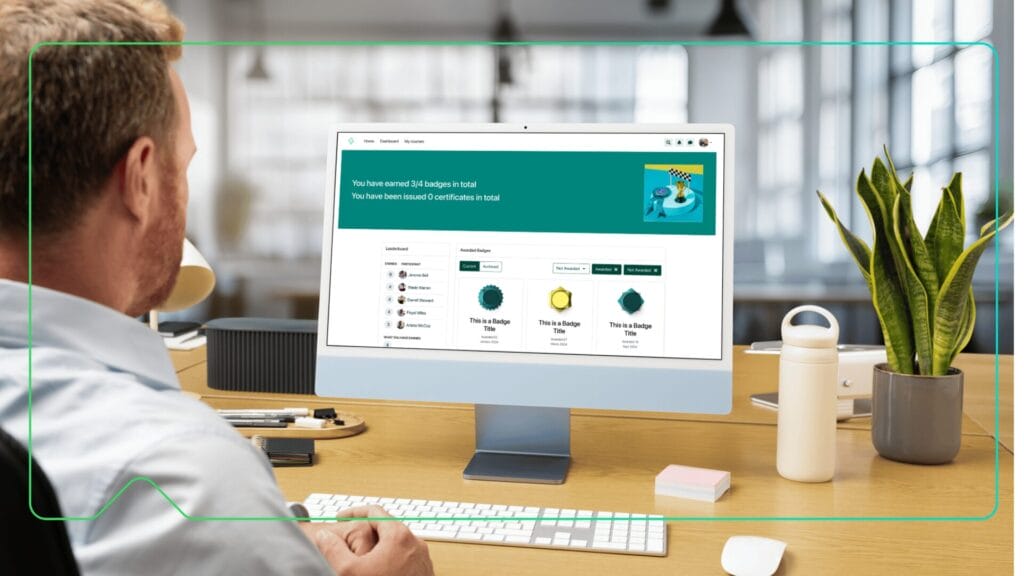
When learners see visible markers of their achievements, it reinforces positive learning behaviour and gives them a compelling reason to keep going. The Spark LMS theme by Synergy Learning, for example, works with your Totara or Moodle LMS to bring you a sleek, intuitive interface with awards walls and leaderboards to encourage healthy competition.
2. Progress tracking and visual dashboards
Seeing the progress made during the learning journey can be a powerful motivator to keep going. When learners can visually track how far they’ve come (along with how close they are to completing a module or course), they’re far more likely to return consistently.
A well-designed learning journey should allow learners to:
- ✳️ Instantly view their course completion status and upcoming activities.
- ✳️ See clear visual cues such as progress bars, checklists and milestone indicators.
- ✳️ Reflect on what they’ve already accomplished through dashboards that consolidate performance, badges achieved and activities completed.
Let’s say you have a customer service associate enrolled on a compliance course. The content is important, but it’s dense. The LMS they’re using is incredibly basic and doesn’t show any clear indicators of how much has been completed or how far they have to go.
Every time the learner logs in, it feels like they’re starting from scratch with no idea how far they’ve got to go. After a few sessions of jumping in and out of activities, frustration sets in. There’s no feedback loop to tell the learner what they’ve achieved so far or how close they are to reaching their goals. Eventually, this learner starts skipping sessions altogether and the course completion deadline passes without notice.
Now, let’s imagine that this same course is delivered in a modern LMS equipped with gamification tools. The experience is different from the first login:
- ✳️ A bright, clear dashboard greets the learner with a progress bar showing that the course is 25% complete.
- ✳️ Completed modules are visibly ticked off, giving the learner a sense of accomplishment.
- ✳️ A badge earned for finishing the onboarding quiz pops up, offering a meaningful reward.
- ✳️ A ‘Next Activity’ button gently guides the learner forward, making the learning journey feel purposeful rather than overwhelming.

The good news is that this doesn’t mean you have to reinvent your courses completely. If your LMS has the tools to make progress visible, your learners can see how far they’ve come and how close they are to success. These are small changes that make a huge difference to learner engagement.
The Course Section Completion in our Spark LMS theme displays overall completion progress within courses, as well as more detailed completion statuses within each section of a course.
3. Leaderboards and peer competition
When it’s done right, a little bit of healthy competition can go a long way in driving learner engagement. Leaderboards and peer-based challenges introduce a social element to learning, transforming it from a solitary activity into an active, shared experience.
Whether you choose to highlight top scores, most completions or most forum contributions, leaderboards can help you:

- ✳️ Introduce friendly competition that motivates learners to push themselves harder
- ✳️ Reinforce community and team spirit
- ✳️ Celebrate and reinforce positive learning behaviours
Far from pressuring learners into tense competition, well-designed leaderboards offer new ways to engage, monitor progress and celebrate wins in a small, encouraging space. Evidence shows that leaderboards provoke competition, which in turn creates social pressure to increase engagement in an activity.
However, while encouraging your top performers is important, this shouldn’t come at the expense of demotivating others. In reality, your high achievers are often the ones who require the least motivational support and it’s your newer or less engaged learners who may benefit most from being recognised.
To make your leaderboards inclusive and effective, consider highlighting the following:
- ✳️ Top movers – learners who’ve made the most progress in a week or month, regardless of where they started.
- ✳️ Rising stars – new joiners who’ve hit the ground running.
- ✳️ Consistency and improvement – who’s making strides with regular learning activities over time, rather than focusing on raw scores.
This is why flexibility is key in your LMS. Look for tools that let you customise leaderboard categories and metrics. You can also segment by team, department or learner-level (for example, by using ‘audiences’ in Totara and Moodle). The Spark LMS theme by Synergy Learning also allows you to introduce leaderboards aligned with your brand for an intuitive, cohesive experience.
Ready to drive learner engagement with gamification?
Whether you’re just starting to explore gamification in your LMS or you’re looking to refine your current strategy, remember: small, thoughtful changes can spark big wins in learner engagement.
Want to find out how Synergy Learning can transform your gamified learning experience? Get in touch and we’d be happy to chat through your needs.