21 August 2024
Online Learning vs Offline Learning: which is better?
This article compares some of the key advantages of online learning vs offline learning.
If you’re delivering workplace learning to your team, you might be weighing up the benefits of online learning vs offline learning for your organisation.
In this article, we’re going to look at the advantages of using online learning and the latest learning technologies to achieve your learning and development goals in comparison to the traditional approach of delivering offline learning in a classroom or training room.
Online learning vs. offline learning
There are a variety of benefits for online and offline learning systems, from greater accessibility and flexibility provided by online learning and the advantage of having face-to-face interaction with offline in-person learning.
Here we will explore some of the key benefits of both online and offline learning.


Benefits of online learning
Accessibility
Online learning provides easy access to everyone, regardless of location. Learning doesn’t have to be limited to those who can be physically present at a specific time and place. This increases accessibility and also makes delivery simpler and more fair.
Flexibility
Location, device, time — everything is more flexible in online learning than would be the case with offline learning.
Both you and your learners have greater control over their learning experience.
Scalability
Online learning makes it easier to deliver learning to almost any number of learners at the same time.
This is an advantage over offline learning, which requires the classroom size to increase to match an increase in learners or for learning to be spread over a larger number of sessions, which increases the cost, time and resources needed to deliver the learning.
Variety
You can deliver a far greater variety of courses and learning pathways using online learning than would ever be possible with offline learning.
This makes it easier for learners to follow customised learning journeys.
Lower costs
Online learning helps you and your learners to save money on room hire, travel expenses and other costs that come with gathering people together in a single location.
More comfortable
With learners free to learn wherever they want, at whatever time they want and wearing whatever they want, online learning can be more casual and comfortable than offline learning.
Increased interactivity
Technology such as H5P makes it easier to create more engaging multimedia learning experiences that would be possible or practical in a classroom.
Benefits of offline learning
Face-to-face interaction
There are obvious benefits of direct human interaction that come with offline learning. While online learning web conferencing has bridged the gap, there are still advantages when learner and educator are together in the room.
The same is true when it comes to collaboration with peers.
Greater focus
Some learners may feel a responsibility or a social pressure to pay closer attention when they are in the same room as the educator than they would if they were learning remotely.
People may feel conscious of appearing rude.
Lower investment
If you’ve always provided offline learning, you may be able to continue without making the investment required when buying an LMS.
The flip side is that you won’t be able to make the savings in time, money and resources we mentioned in relation to online learning.
Direct supervision
Offline learning lends itself to direct supervision, particularly of practical activities.
In some cases, this can be achieved in video conferencing or video submissions but there are obvious advantages to a tutor observing some activities at close quarters.
Which is best: online learning or offline learning?
As we’ve seen above, both online learning and offline learning have their benefits. Which is best will depend on the circumstances in which you’re delivering the learning.
Factors affecting this include:
❇️ Distance between learner and educator
If you’re delivering to a dispersed audience, online learning will not only be preferable but also a necessity.
One of the key advantages of online learning is that it makes it far easier to reach remote learners.
❇️ The number of learners
The greater the number of learners, the more likely it is that online learning is the best option.
It might make sense to get a handful of learners together in a classroom, but once attendance numbers start to increase that becomes impractical and online learning is better.
If you’re delivering to a dispersed audience, online learning will not only be preferable but also a necessity.
One of the key advantages of online learning is that it makes it far easier to reach remote learners.

❇️ The subject matter
Some subjects are best taught in person, others are either better suited to online learning and most subjects can be taught either online or offline. Driving is a good example of something for which offline learning is the obvious choice.
The same is true of other practical activities that are either potentially dangerous or need close scrutiny from a tutor.
❇️ Technology and infrastructure
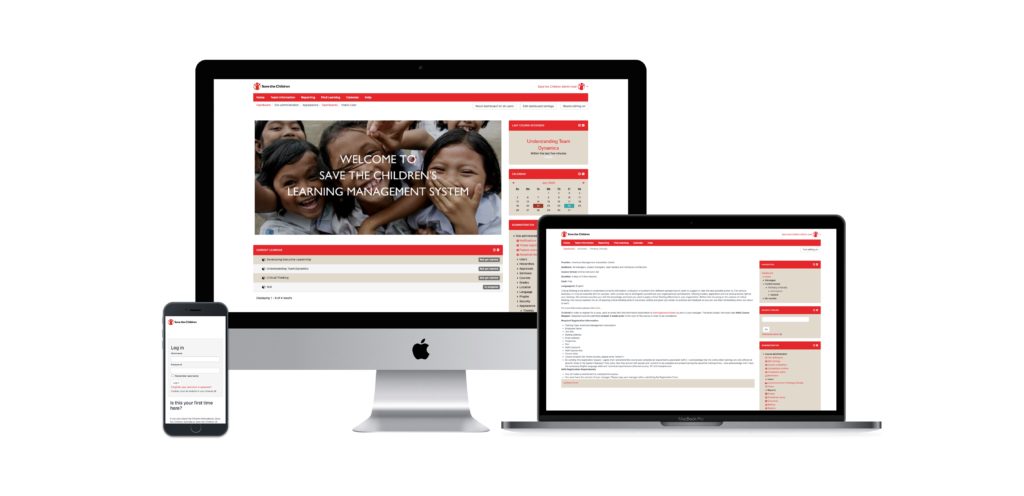
We work with organisations such as Save the Children for whom online learning is the preferred but sometimes impossible option for its team in dangerous or remote locations.
Online Learning vs Offline Learning: the conclusion
The best way for you to deliver learning really depends on the learning you need to deliver and who it needs to reach. While online learning will be a far more affordable and versatile option in the vast majority of cases, sometimes offline learning is either the better or only viable option.
Our recommendation is to give your organisation the best of both worlds: an LMS that meets your online learning objectives but also has the tools and infrastructure to manage offline learning and blended learning.
That way, you can deliver offline learning when it makes sense to do so, but continue to consolidate things like attendance, grading and reporting within your LMS. This brings at least some of the cost and efficiency savings of online learning to your offline learning.
Talk to us about online or blended learning
Get in touch to discuss how a customised LMS would help you achieve your online learning or blended learning goals.