7 November 2025
How to connect learning to performance (and prove it)

Natalie Ann Holborow
Content Marketing Manager
Most learning and development teams recognise that learning needs to align with performance, but fewer understand how to achieve it. Harder still is to prove the impact of learning interventions on the wider business.
In this article, we’ll explore what it means to connect learning to organisational performance, why many strategies fall short and some practical steps to help you bridge the gap.
Why learning still feels disconnected from business outcomes
Most leaders would agree that learning should align with business priorities, but in practice, this alignment often falls short. In fact, according to McKinsey, only 40% of companies say their learning strategy is actually connected to business goals. One of the core issues is a misalignment between what learning and development teams deliver and what the business actually needs. Courses are often created reactively, based on perceived gaps, generic skill trends or compliance requirements, rather than performance learning being rooted in strategic business goals.
The same McKinsey report also found that just 16% of companies surveyed can see a clear business impact from learning and development initiatives. This disconnect leads to learning content that may be high-quality but is ultimately misdirected, failing to move the needle on performance or productivity.
This problem is compounded by outdated metrics. Many organisations still rely on completion rates, course attendance or satisfaction scores as indicators of success. But finishing a course doesn’t necessarily mean someone can apply the skill (i.e. learning transfer has occurred) or that it’s made any difference to their performance.

Another challenge is the siloed nature of systems and teams. HR, L&D and business leaders often operate in parallel with different goals, KPIs and priorities. While HR might focus on performance reviews, L&D might be tracking completions and operations teams on output and revenue. Without shared frameworks or integrated platforms, learning remains isolated from the flow of everyday work.
This disconnect is rarely caused by a lack of effort. More often, it results from L&D teams working in isolation or being tasked with delivery rather than being involved in strategic decision-making from the outset.
Start with business goals before the data
Before you start collecting learning data (or even knowing what data to collect), ask yourself: “What do I want this learning data to prove to the organisation?”
When you know from the outset what you’re trying to demonstrate – and which business priorities it supports – you’re in a far stronger position to decide what to track, how to track it and why it matters.
This is exactly why deeper collaboration with business stakeholders continues to rise on L&D’s agenda. Donald H Taylor’s annual Global Sentiment Survey consistently highlights the growing importance of business alignment and it’s no surprise. The closer L&D teams get to the business, the more relevant and proactive their learning strategies become. It means designing solutions that are aligned from day one and not retrofitted afterwards.
How to align learning to performance
Here are some practical steps to help your learning strategy move beyond completion rates and start making a measurable difference to performance.

1. Identify a real business priority
Start by identifying one performance goal that matters to your organisation right now; for example, reducing time-to-competence, increasing productivity or strengthening customer service. Ask yourself: “What performance shift are we trying to drive and where can learning interventions help – if at all?” For example, instead of delivering generic communication training, you could link it directly to improving NPS scores within the customer service team.
2. Define performance-focused outcomes
Collaborate with managers to translate key business objectives into measurable outcomes. What should people be doing differently post-learning? What does ‘good’ look like in their role? For example, in performance management systems such as Totara Perform, we work with our clients to help map these outcomes to specific competencies, job roles and progression pathways. This ensures that every piece of training links back to performance expectations.
3. Embed learning into the flow of work
If learning is just a task that employees ‘tick off’, then it’s time to start shifting perceptions. Learning should be integrated into how employees grow, perform and contribute to outcomes. In platforms such as Moodle and Totara, you can build knowledge-sharing spaces, recommend relevant content or push just-in-time training to the right people. Learning becomes something people use in the flow of work, not just in formal sessions.
4. Measure what matters
Tracking attendance and course completions is a starting point, but it doesn’t give you the full picture on whether the learning intervention has made a difference. To connect learning with performance, you need to look beyond activity logs and learner ‘happy sheets’, and start tracking signs of applied learning – in other words, the real-world changes that indicate new knowledge or skills are being put into practice.
Applied learning might look something like the following:
- ✅ Fewer errors or incidents on the job after safety or compliance training
- ✅ Improved KPIs such as higher sales conversions, faster customer response times or better quality assurance scores
- ✅ Faster onboarding, with new hires reaching full competency sooner
- ✅ Increased internal mobility, where more employees gain the skills needed to step into new roles
These are the kind of performance improvements that business leaders care about and can help L&D teams prove their strategic value.
5. Reinforce learning through feedback and follow-up
Course completion is just the beginning. The real impact of learning shows up after the training, when people start applying what they’ve learned in real situations. However, without reinforcement, most of that learning simply fades.
According to cognitive science research, learners forget up to 70% of new information within 24 hours (Ebbinghaus’ Forgetting Curve). Without structured reinforcement, even the most engaging training content is unlikely to drive long-term behavioural change.
This is why feedback, reflection and timely follow-up are critical. Used together, they are effective methods to increase retention and support habit formation. You want to make sure that learning doesn’t just end when the course does. Instead, it should be supported and sustained in the weeks and months that follow, increasing the likelihood of meaningful behaviour change and long-term performance improvement.
Ready to link learning to performance?
At Synergy Learning, we work as your partners in achieving success through learning technologies. We help organisations define the outcomes that matter, map them to learning journeys and build the right systems in Moodle or Totara to measure progress in a way that makes sense to stakeholders.
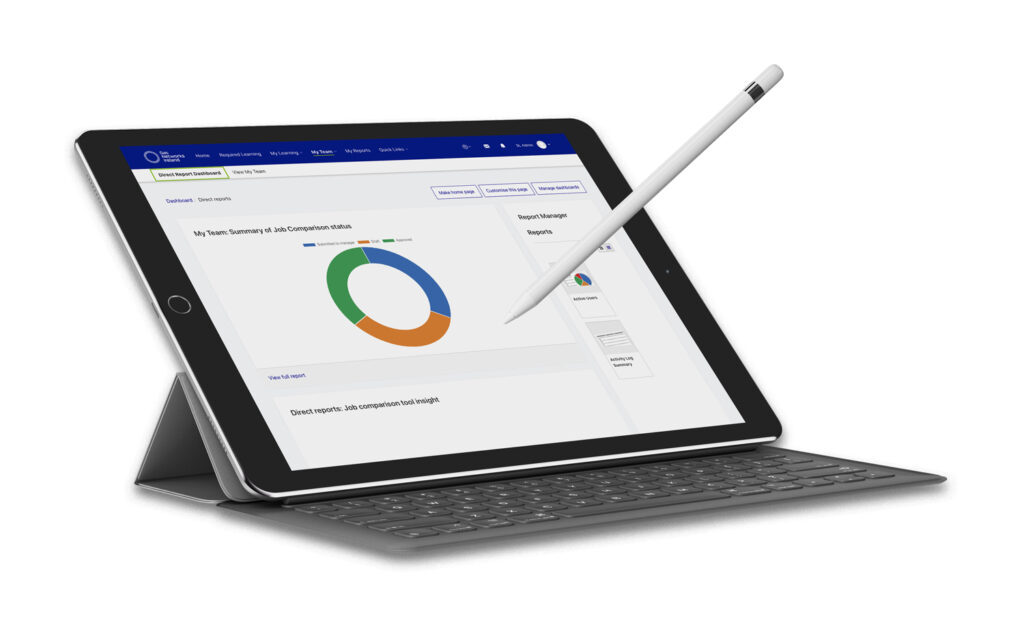
For example, at Gas Networks Ireland, a safety-first culture is a business-critical requirement. With a workforce of over 700 people responsible for the national gas network, the organisation needed a learning platform that could deliver essential safety training at the right time and place. Working with Synergy Learning since 2016, Gas Networks Ireland upgraded its Learnworks platform with a focus on improving user experience, supporting mobile access and closing skills gaps. Using a custom-built training needs analysis tool, the business can now identify competency gaps across teams and individuals, enabling smarter workforce planning and personal development.
The project demonstrates how the right technology, configured with performance in mind, can help align learning with operational goals, improve engagement and strengthen compliance from the ground up.
Want to discover what we can do for you, too? Get in touch, and we’d love to chat through what success looks like for you and how we can work together to achieve it.