
15 June 2026
Off-the-shelf vs custom e-learning content options
Find the right learning content options to deliver the experiences you want for your learners.
Every L&D team faces the same challenge: delivering high-quality learning experiences with limited time, budget and resources. Whether you’re onboarding new starters, addressing compliance requirements or building future skills, one question always arises: should you build e-learning content yourself, buy off-the-shelf learning content or invest in bespoke development?
There isn’t any one-size-fits all answer to this question. The most successful organisations rarely rely on a single approach; instead, they combine different content strategies depending on the learning need, audience and business objectives.
Here’s everything you need to consider to make the right choice about your e-learning content options.
Choosing the right e-learning content options
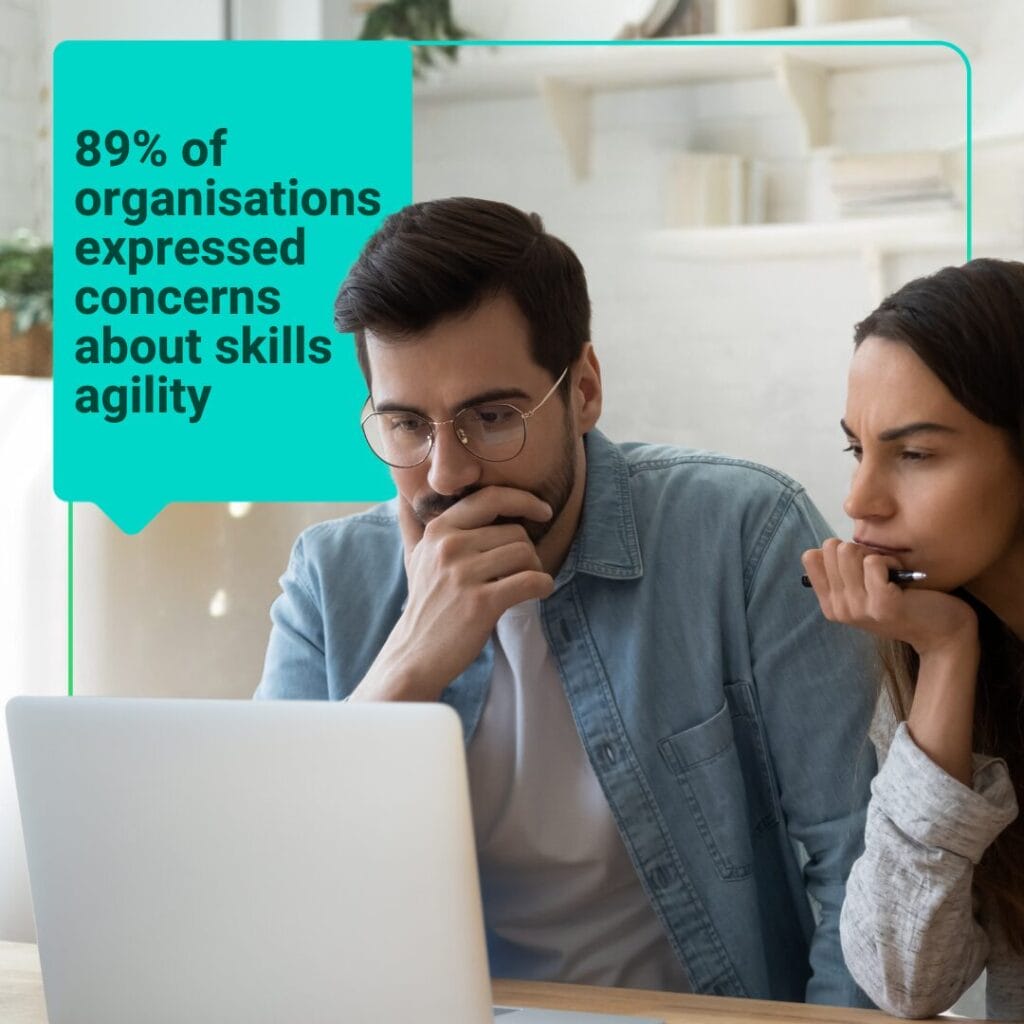
In Linkedin’s 2026 Talent Report, 89% of organisations expressed concerns about skills agility. At the same time, L&D teams are being asked to:
- ✅ Upskill and reskill workforces faster
- ✅ Support hybrid and remote employees
- ✅ Improve compliance outcomes
- ✅ Deliver measurable business impact
- ✅ Do more with less budget
This has naturally created a growing need for learning content that can be deployed quickly and scaled effectively in the face of changing business priorities. So, how do you deploy the right content in the most sustainable way?
In the simplest terms, there are three ways of approaching learning content:
- ✳️ Create your own learning content.
- ✳️ Buy off-the-shelf learning content.
- ✳️ Have someone like us create bespoke learning content for you.
Let’s take a look at the e-learning content options and what they mean.
Creating your own learning content
It’s never been easier to create your own learning content. Platforms like Totara Learn, Moodle LMS and Moodle Workplace make it really straightforward to build content using a suite of tools already included within the package.
These tools allow you to:
- ✅ Break down content topics into smaller, bitesize chunks
- ✅ Embed video and other multimedia content
- ✅ Upload SCORM (Shareable Content Object Reference Model) packages built using other authoring tools
- ✅ Embed H5P content for media-rich, interactive experiences
- ✅ Create quizzes
- ✅ Set and grade assignments
When should you use in-house e-learning content?
Internal content development is often the best option when the subject matter is unique to your organisation. For example, in-house content can be created specifically for the following contexts:
- ✳️ Internal systems and processes
- ✳️ Proprietary products or services
- ✳️ Organisation-specific policies
- ✳️ Company culture and values
- ✳️ Strategic transformation initiatives
These are all examples of areas where organisational context is essential, meaning ready-made content is unlikely to provide the level of relevance you need.
What are the pros and cons of in-house e-learning content?
Pros
Creating content internally gives you complete control over the learning experience. This means you can tailor every aspect of the content to your organisation’s processes, culture and objectives, making it particularly effective for role-specific training, internal systems and proprietary knowledge.

Cons
Developing high-quality e-learning content in-house requires significant investment in time, expertise and resources. Beyond finding subject matter experts to write the content itself, you also need to consider instructional design, stakeholder reviews, accessibility, testing and ongoing maintenance.
However, if you’ve got the skills to create content in-house – or you get LMS training to build these skills – creating your own learning content can be a cost-effective way of creating unique courses that do exactly what you need them to do.
Buying off-the-shelf learning content
Buying existing modules is another way of securing the learning content you need. Buying learning content is a useful option if:
- ✳️ You don’t have the in-house skills to be able to create your own learning content
- ✳️ You don’t have the in-house knowledge to create learning content on a specific topic or topics
- ✳️ You need learning content for a generic topic that isn’t specific to your organisation
- ✳️ You want to save your budget to create unique content on topics that are specific to your organisation by buying ready-made learning content in other areas
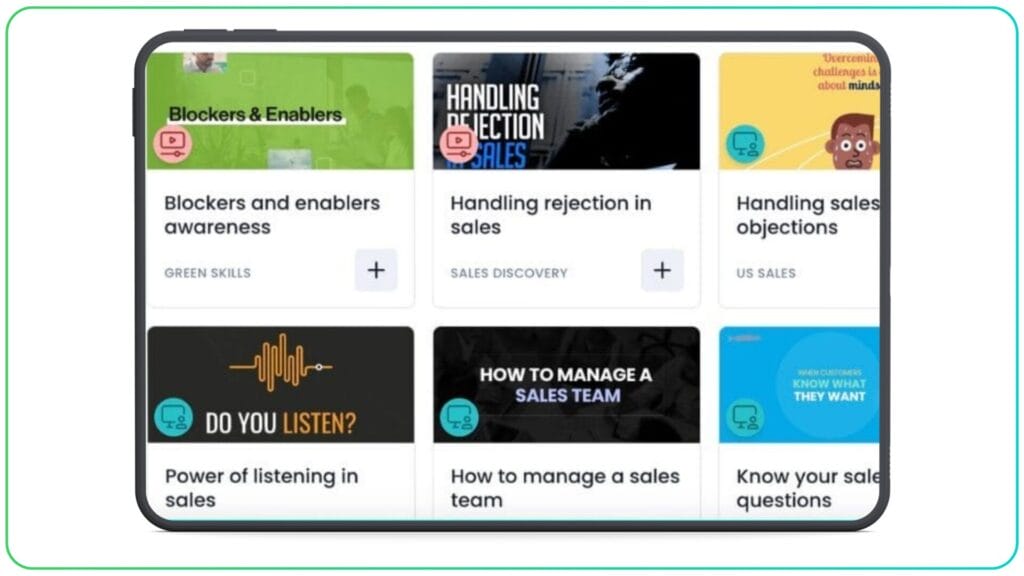
Rather than developing every course internally, organisations can access professionally designed content that is ready to deploy immediately. This is particularly useful for training topics that are consistent across industries such as health and safety, cybersecurity, leadership fundamentals, communication skills, wellbeing, customer service, digital skills, and diversity and inclusion.
When should you use off-the-shelf e-learning content?
For L&D teams, off-the-shelf learning is often used to support:
- ✳️ Onboarding programmes
- ✳️ Compliance training
- ✳️ Leadership development
- ✳️ Cybersecurity awareness
- ✳️ Wellbeing initiatives
- ✳️ Role-based upskilling
For example, a business rolling out hybrid working could quickly deploy learning around remote collaboration, cybersecurity and managing hybrid teams, rather than waiting months for custom development.
Off-the-shelf content is also well-suited to mandatory training such as GDPR, anti-bribery, safeguarding or health and safety, where speed and scalability are important.
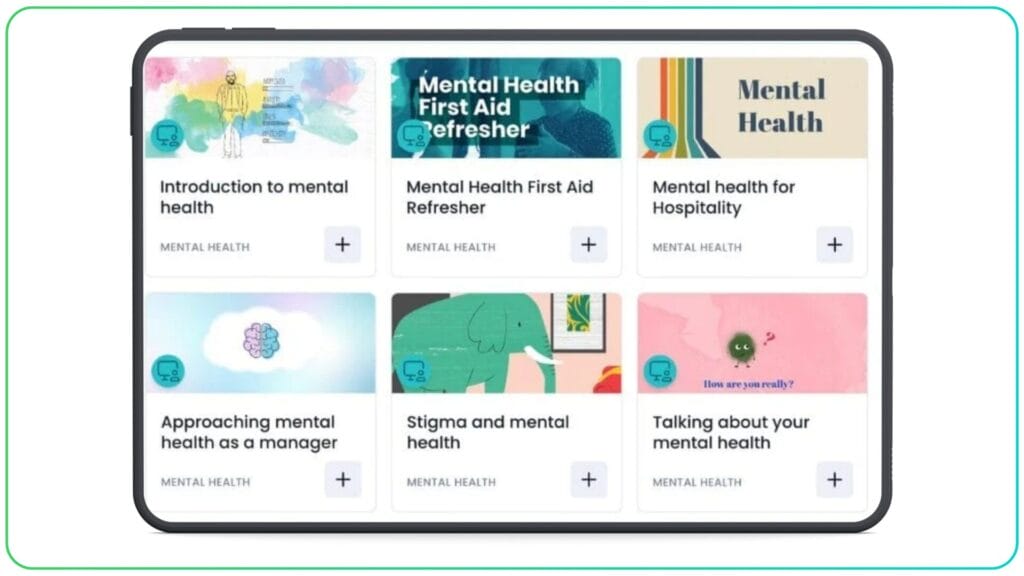
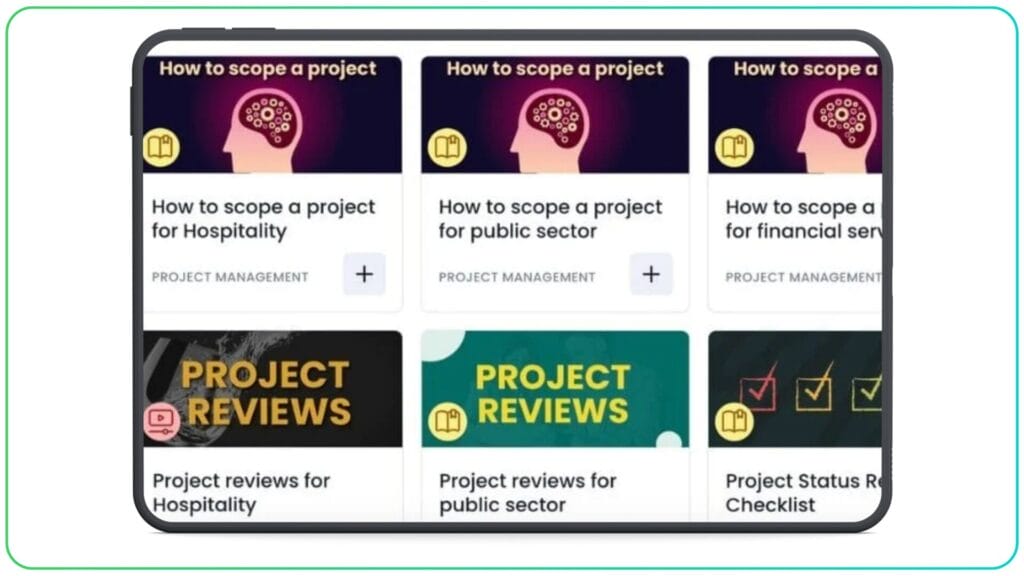
Synergy Learning’s Core content offering includes learning resources across leadership and management, compliance, cyber and information security, health and safety, mental wellbeing, digital skills, project management, communication skills and more. This breadth of topics, authored by subject matter experts and designed with learner experience in mind, allows organisations to support both mandatory training and ongoing professional development through a single content solution.
What are the pros and cons of off-the-shelf e-learning content?
Pros
Off-the-shelf content offers a fast, cost-effective way to address common learning needs such as compliance, leadership, wellbeing, cybersecurity and more. It allows you to deploy learning quickly, scale training across large audiences and provide consistent learning experiences without lengthy development cycles.
Cons
The trade-off is that the content won’t be specifically designed around your organisation’s culture, systems or processes. In some cases, additional context may be needed through workshops, discussions or supporting resources. However, for many foundational learning topics, the quality and breadth of modern content libraries outweigh the need for full customisation.
With some ready-made learning content, you can expand or customise the existing module to tailor the content for your organisation. Plus, most off-the-shelf content is in the form of SCORM packages that are quick and easy to update when new versions are released or other changes introduced.
Investing in custom e-learning content
The final option – and one which incorporates everything we’ve mentioned so far – is to have us create custom learning content for you.
This is a useful option if you don’t have the skills, time or resources to create your own learning content. This approach would include:
- ✳️ Digital conversion – Taking your existing documents and workbooks and converting them into engaging online content using the core functionality of your LMS. See how Nottinghamshire Fire and Rescue Service successfully digitised their National Operational Guidance (NOG) at scale, delivering 143 modules at scale.
- ✳️ Expanding your content offering – Using industry-leading content packages to expand and complement your existing learning content.
Creating tailored content – Creating new, interactive learning modules from scratch with a full-service content conversion based on our detailed knowledge of in-built tools and other multimedia functionality.

When should you use custom e-learning content?
Custom learning content is often the right choice in scenarios where generic examples and broad concepts may not be enough to drive behavioural change. For example, custom e-learning content might be the right choice for:
- ✳️ System implementation projects
- ✳️ Product training
- ✳️ Strategic transformation programmes
- ✳️ Culture change initiatives
- ✳️ Highly specialised regulatory environments
This approach helps you to deliver a truly unique learning experience for your learners without tying up your in-house resources. We can guide you to create engaging content that can be tracked and reported on. This reduces the need for you to run costly, time-consuming, ad hoc face-to-face training sessions.
If you don’t have the resources in-house to create content from scratch, bespoke content can help plug that gap by outsourcing it to experts.
What are the pros and cons of custom e-learning content?
Pros
Custom e-learning content is designed specifically for your organisation, making it ideal for product training and organisation-specific processes. It allows you to create highly contextualised learning experiences that align closely with your business goals and learner needs.
Cons
The downside is that custom development typically requires a greater investment of time and budget. Projects often involve extensive consultation, design, review and testing phases, meaning they can take weeks or months to launch. As with in-house content creation, custom e-learning content is often most effective when reserved for scenarios where organisational context is critical.
The most effective content approach: build, buy or blend?
How do you strike the right balance between efficiency and customisation?
A common approach is to use off-the-shelf content as the foundation of a programme and layer custom elements on top. For example, an organisation might use ready-made leadership content to develop core management skills, then supplement it with workshops, case studies and resources tailored to its culture, values and strategic objectives.
This blended approach allows L&D teams to maximise budgets and focus internal resources on creating custom learning content only where it will add the greatest value.
For example, an organisation may use ready-made leadership content to build core management capabilities, then supplement it with workshops, coaching sessions and internal case studies that reflect its own culture and leadership expectations.
Similarly, compliance training might be delivered through off-the-shelf content, while organisation-specific policies and procedures are covered through custom resources.
Talk to us about your learning content options
When used strategically, often beside custom learning, off-the-shelf content can help your organisation build a more responsive and future-ready learning culture. It’s your key to achieving:
- ✳️ Faster deployment
- ✳️ Greater scalability
- ✳️ Improved learner access
- ✳️ Continuous learning support
- ✳️ More agile workforce development
The key is choosing an off-the-shelf content option that’s engaging, relevant, inclusive and aligned to organisational priorities.
Explore or content options or get in touch and one of our learning experts will be happy to chat through your learning content needs.